
Don’t wait for small roofing issues to turn into costly repairs—partner with a trusted Philadelphia roofing contractor in Philadelphia today for reliable service, expert craftsmanship, and a free, no-obligation estimate.
We all know the feeling: waking up on a freezing winter morning, shivering as our bare feet hit the cold floor, and cranking up the thermostat only to wonder why the house still feels drafty. Or perhaps it’s the height of summer, and your upstairs bedrooms feel like a sauna despite the air conditioning running full blast. In both scenarios, the culprit is often hiding right above your head.
Your roof is more than just a shield against rain and snow; it is the primary thermal barrier for your home. But a roof alone isn’t enough to keep you comfortable. The secret ingredient to a cozy, energy-efficient home lies in the fluffy, foam, or fibrous material tucked between your joists: insulation. To make smart decisions about your home’s comfort and energy bills, you need to understand the language of insulation, starting with its most critical metric: the R-value.
Decoding the “R”: What Does It Actually Mean?
Walk down the insulation aisle of any home improvement store, and you will see big, bold numbers printed on every package: R-13, R-30, R-49. But what do these numbers represent? The “R” stands for Resistance—specifically, thermal resistance. It measures how effectively a material stops the flow of heat.
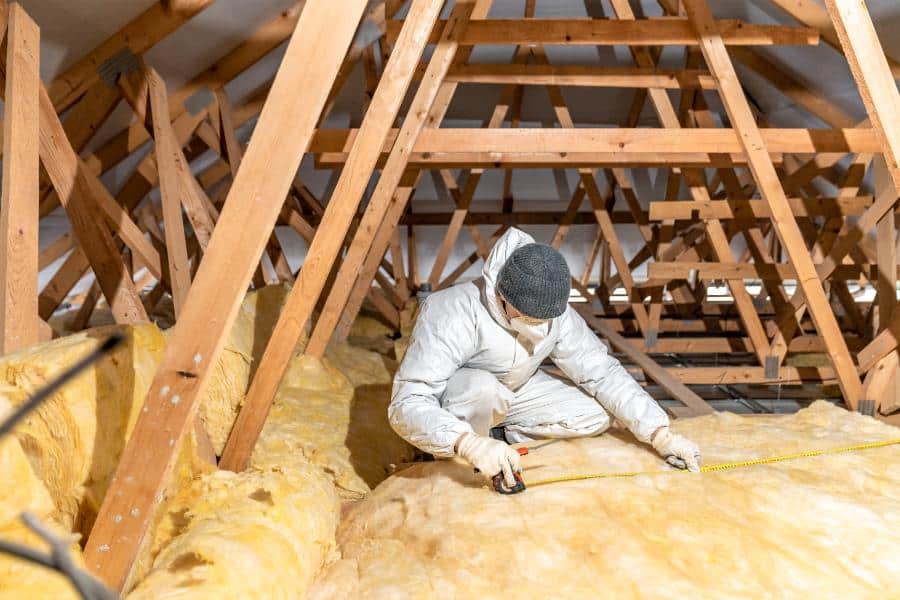
Heat is a restless form of energy; it always wants to move from a warmer area to a cooler one. In the winter, the heat from your furnace tries to escape into the freezing attic. In the summer, the scorching heat from the sun radiates through your roof and tries to invade your cool living space. Insulation acts as a brake on this movement. The higher the R-value, the better the material is at resisting this heat transfer. Think of it like a down jacket for your house: a higher R-value is like wearing a thicker, puffier parka that keeps your body heat locked in.
The Science of Thickness vs. Density
It is a common misconception that R-value is determined solely by thickness. While adding more inches of insulation generally increases the R-value, the material itself plays a huge role. For example, a standard fiberglass batt might have an R-value of about 3.0 per inch. In contrast, closed-cell spray foam can have an R-value of up to 7.0 per inch. This means you would need more than twice the thickness of fiberglass to achieve the same thermal protection as a thin layer of spray foam.
This distinction is crucial when you are dealing with limited space, such as in cathedral ceilings or flat roofs where you can’t simply pile on two feet of fluff. Understanding the R-value per inch of different materials allows you to maximize efficiency even in tight quarters.

Location, Location, Location: Climate Zones Matter
Not every home needs the same amount of insulation. A house in sunny Miami faces very different thermal challenges than a cabin in snowy Minnesota. To help homeowners choose the right level of protection, the Department of Energy has divided the United States into different climate zones, numbered 1 (hottest) to 8 (coldest).
For most attics in moderate climates (Zones 3 and 4), the recommended R-value is typically between R-38 and R-60. This usually translates to about 12 to 18 inches of blown-in cellulose or fiberglass. In colder northern regions (Zones 5-7), building codes often require a minimum of R-49 to R-60 to prevent heat loss and ice dams. Knowing your zone is the first step in determining if your current insulation is up to par or if you are literally burning money every month.
 The “Diminishing Returns” of Insulation
Is more insulation always better? Yes, but with a caveat. The first few inches of insulation provide the most dramatic benefit. Going from R-0 (no insulation) to R-10 makes a massive difference in comfort and savings. Going from R-10 to R-20 doubles that resistance.
However, as you continue to add layers, the incremental savings on your energy bill start to shrink. Upgrading from R-38 to R-60 will still save energy, but the payback period—the time it takes for the energy savings to cover the cost of the project—will be longer than the initial upgrade. The goal is to hit the “sweet spot” recommended for your climate zone, where you maximize comfort and savings without overspending on material you don’t strictly need.
Beyond R-Value: The Importance of Air Sealing
Here is a secret that many insulation contractors might not emphasize enough: R-value only measures resistance to conductive heat flow. It does not account for air leaks. You can have R-60 insulation in your attic, but if there are unsealed gaps around your recessed lights, plumbing vents, and attic hatch, air will bypass the insulation entirely.
This is why air sealing is the best friend of R-value. Before adding new insulation, it is critical to seal up those cracks and gaps with spray foam or caulk. This stops the “stack effect”—the movement of air that sucks heat out of your home—and allows your insulation to perform at its full rated R-value. Think of it as zipping up your coat before stepping into the storm; the warmest wool in the world won’t help if the wind is blowing right through the zipper.
Investing in Comfort
Upgrading your roof insulation is one of the most unglamorous home improvement projects. You can’t show it off to your neighbors like a new kitchen or a landscaped patio. But the return on investment is immediate and tangible. You will feel it in the consistent temperature of your rooms, the silence from outside noise, and the lower numbers on your monthly utility bills. Understanding R-value empowers you to make the right choice for your home, ensuring that your sanctuary stays comfortable, no matter what the weather is doing outside.
