
For most homeowners, the roof is an “out of sight, out of mind” component of the house. We trust it to endure the scorching heat of July, the crushing weight of January snow, and the relentless battering of spring storms without complaint. It is only when a dark water stain blooms on the living room ceiling that we look up and realize our home’s primary defense system is failing. By then, the damage is done, and the checkbook must come out.
Work with a reliable Philadelphia asphalt shingle roof contractor for repairs, replacements, and inspections that protect your home year-round.

An asphalt shingle roof is a significant financial investment, typically designed to last between 20 and 30 years. However, that lifespan is not a guarantee; it is a potential. Neglect can cut that time in half, while proactive care can push it to the absolute limit. Extending the life of your roof isn’t about performing miracles; it is about consistent, small acts of stewardship that prevent minor issues from becoming catastrophic failures. By understanding the enemies of asphalt—sun, moisture, and debris—you can add years of service to your shingles and keep thousands of dollars in your pocket.
The Philosophy of Preventative Roof Care
Think of your roof like a vehicle. You wouldn’t drive a car for 100,000 miles without changing the oil or checking the tires, yet many people expect their roof to perform for decades without a single inspection. Asphalt shingles are durable, composed of a fiberglass mat sandwiched between layers of asphalt and coated in ceramic granules. But they are organic, chemical products that degrade over time. Your goal is to slow that degradation process down. This requires a shift in mindset from reactive repair (fixing leaks) to proactive maintenance (preventing leaks).

Prioritize Proper Attic Ventilation
The biggest threat to your roof often comes from beneath the shingles, not above them. Your attic needs to breathe. Without a balanced system of intake vents (at the soffits) and exhaust vents (at the ridge), heat and moisture become trapped in the attic space. In the summer, attic temperatures can soar to 160 degrees Fahrenheit. This superheated air cooks the shingles from the underside, causing the asphalt to dry out, become brittle, and crack prematurely. This is known as “baking” the roof.
In the winter, poor ventilation traps warm, moist air from your home inside the attic. This moisture condenses on the cold roof deck, leading to wood rot and mold that weakens the structure holding the shingles up. Ensuring your attic has continuous airflow is the single most effective way to regulate temperature and keep the shingles flexible and healthy.
Wage War on Moss and Algae
If you live in a humid climate or have a roof shaded by large trees, you have likely seen green, velvety patches of moss or dark black streaks of algae. While the black streaks (Gloeocapsa magma) are mostly a cosmetic nuisance, thick green moss is a structural predator. Moss acts like a sponge, soaking up rainwater and holding it against the surface of the shingles. This constant moisture breaks down the asphalt and rots the granules.
Even worse, as moss grows, its root-like rhizoids grow under the edges of the shingles, lifting them up. This breaks the adhesive seal that protects against wind damage, allowing water to blow underneath during storms. If you see moss, do not power wash it, as the high pressure will strip the protective granules right off the shingle. Instead, use a gentle, specialized chemical treatment or a zinc sulfate powder to kill the growth without harming the roof surface.
Keep Gutters and Valleys Debris-Free
Your roof is designed to shed water, not store it. When pine needles, leaves, and twigs accumulate in the valleys of your roof or clog the gutters, they create natural dams. Wet debris acts like a soggy blanket, trapping moisture against the shingles and preventing them from drying out. This accelerates granule loss and promotes rot.
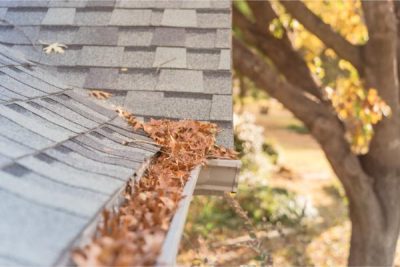
Furthermore, when gutters are clogged, water can back up and wick under the lower rows of shingles and behind the fascia board. This leads to the dreaded “ice dams” in winter, where refreezing water tears apart the roof edge. Cleaning your gutters twice a year—once in late spring and once in late autumn—ensures that water can exit your roof system rapidly and safely.
Trim Overhanging Tree Branches
Trees are beautiful, but they can be bullies to a roof. Branches that hang directly over your home pose several risks. First, they drop the sap, leaves, and seeds that feed moss and clog gutters. Second, they provide a direct highway for squirrels, raccoons, and rats to access your roof, where they can chew through vents and shingles to nest in your attic.
Most physically damaging, however, is the “sandpaper effect.” During a windstorm, low-hanging branches can whip back and forth, scraping across the roof surface. This abrasive action scours the granules off the shingles, leaving the asphalt exposed to the sun’s UV rays. Once the granules are gone, the shingle fails rapidly. Keep all tree limbs trimmed back at least six to ten feet from the roofline to allow for sunlight and air circulation.
Check the Flashings and Seals
Finally, remember that a roof rarely leaks in the middle of a field of shingles; it leaks at the transition points. The metal flashings around your chimney, skylights, plumbing vents, and valleys are the critical joints of the system. Over time, the caulk and sealant used to waterproof these metal pieces can dry out and crack.
Learn how to extend the lifespan of your asphalt shingle roof with proper maintenance, timely repairs, and preventative care tips.
Inspect these areas annually. If you see rusted metal, cracked rubber boots around vent pipes, or dried-out tar, have them repaired immediately. Replacing a $50 plumbing boot or resealing a chimney flashing is a minor expense that prevents thousands of dollars in water damage. By catching these small failure points early, you ensure the rest of the roof system can continue to do its job for years to come.
