
Work with a reliable Philadelphia solar roofing contractor for repairs, replacements, and inspections that protect your home year-round.
Living in Pennsylvania means adapting to a climate of extremes. We enjoy the beauty of four distinct seasons, but our homes endure a grueling annual cycle. From the sweltering, humid heat waves of July to the bone-chilling winds and heavy snow loads of February, a Pennsylvania roof takes a beating. For decades, the primary goal of a roof was simply to keep the water out. Today, however, with rising energy costs and a greater focus on sustainability, a roof must do more than just shed rain—it needs to act as a thermal barrier.

For Pennsylvania homeowners, energy efficiency isn’t just about being “green”; it is about financial survival and comfort. An inefficient roof acts like a thermal bridge, transferring the sun’s searing heat into your attic in the summer and allowing your expensive furnace heat to escape in the winter. Choosing the right material can lower your utility bills by up to 20% and extend the lifespan of your HVAC system. But unlike homeowners in Arizona or Florida who focus solely on heat reflection, Pennsylvanians must choose materials that can handle the freeze-thaw cycle while balancing year-round performance.
Balancing Heat Reflection and Thermal Insulation
The science of an energy-efficient roof (from a solar roofing contractor) comes down to two main properties: solar reflectance and thermal emittance. Reflectance is the roof’s ability to bounce sunlight back into the atmosphere rather than absorbing it as heat. Emittance is how quickly the roof releases the heat it does absorb. In a mixed climate like ours, the goal is to keep the roof surface temperature as close to the ambient air temperature as possible.
Historically, this meant you had to install a stark white roof to see any benefits—a look that rarely suits the architectural style of a colonial or craftsman home in the Keystone State. Fortunately, technology has evolved. We now have access to materials that mimic the traditional look of slate, wood, or asphalt while hiding sophisticated energy-saving capabilities beneath the surface.
The Evolution of Asphalt: “Cool Roof” Shingles
Asphalt shingles remain the most popular roofing choice in Pennsylvania due to their affordability and aesthetic versatility. In the past, standard dark asphalt shingles were notorious heat sponges, often reaching surface temperatures of 160 degrees on a sunny day. This heat would radiate downward, turning your attic into an oven and forcing your air conditioner to run continuously.
Enter the “cool roof” shingle. These modern architectural shingles are embedded with specially coated reflective granules. To the naked eye, they look like standard charcoal, brown, or slate-colored shingles. However, on a microscopic level, these granules are designed to reflect a higher percentage of infrared light. This technology can lower the roof’s surface temperature by up to 50 degrees compared to standard shingles. For a PA home, this means a significantly cooler attic in the summer without sacrificing the traditional curb appeal that fits our neighborhoods.
Metal Roofing: The All-Season Performer
If you are looking for the gold standard in energy efficiency for the Northeast, metal roofing is hard to beat. Whether it is a standing seam system or stone-coated steel tiles, metal excels in our climate for two reasons: reflectivity and low thermal mass.
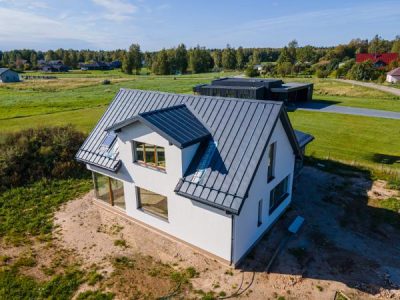
Metal roofs naturally reflect solar radiation, especially when painted with Kynar 500 or Hylar 5000 coatings, which are designed to resist fading and chalking while bouncing heat away. Unlike asphalt or concrete, metal has very low thermal mass, meaning it doesn’t retain heat. Once the sun goes down, a metal roof cools off almost instantly, stopping the heat transfer into your home. Furthermore, in the winter, metal is impervious to the freeze-thaw cycle that cracks other materials, and it sheds snow easily, preventing the ice dams that plague so many Pennsylvania eaves.
Synthetic Slate and Shake: Insulation Meets Aesthetics
Pennsylvania is rich in historic architecture, and for many homeowners, the look of natural slate or cedar shake is non-negotiable. However, real slate is incredibly heavy and expensive, and real wood offers poor fire resistance and insulation value. Synthetic composite roofing offers a brilliant solution.
Made from recycled polymers and rubber, these tiles are molded from real slate and wood to capture the authentic texture. Beyond their beauty, they are excellent insulators. Because they are often installed with a cavity or air gap between the tile and the deck, they create a natural thermal break. This air pocket acts as extra insulation, preventing heat from entering in the summer and escaping in the winter. They offer the highest impact resistance against hail and wind, making them a “forever roof” that keeps your home comfortable year-round.
The Critical Role of Ventilation
Finally, no discussion of energy efficiency in Pennsylvania is complete without mentioning ventilation. You can buy the most expensive, reflective roofing material on the market, but if your attic cannot breathe, you are wasting your money. Proper ventilation—a balanced system of intake vents at the soffits and exhaust vents at the ridge—is the engine that drives energy efficiency.
In the summer, airflow flushes out the superheated air that accumulates in the attic. In the winter, it keeps the roof deck cold, which prevents the snow from melting unevenly and refreezing as ice dams. A well-ventilated roof protects your insulation from moisture saturation, ensuring it remains fluffy and effective. When replacing your roof, always insist that the contractor calculates the proper “Net Free Area” for ventilation to ensure your new energy-efficient materials can perform at their peak.
Explore energy‑efficient roofing options for Pennsylvania homes—compare materials like metal, cool shingles, tiles & more to cut bills and boost comfort.
Making the Right Choice for Your Home
Choosing an energy-efficient roof is an investment in the future comfort and value of your home. While the upfront cost of cool shingles or metal systems may be slightly higher than builder-grade options, the monthly savings on heating and cooling bills—coupled with the extended lifespan of the roof—make it a financially sound decision for any Pennsylvania homeowner.
