
Professional Philadelphia roofing contractor providing affordable roofing services designed to keep your property safe and secure.
When you look at a roof, your eyes are naturally drawn to the shingles—the colorful, textured armor that covers the vast majority of your home. But just like a chain is only as strong as its weakest link, a roof is only as effective as its edges. Tucked away at the perimeter, often unnoticed by the casual observer, lies a critical component of your home’s defense system: the drip edge. This slender strip of metal is the unsung hero of water management, performing a vital role in the longevity of your roof and the structural integrity of your home.
Water is a relentless force. Given the chance, it will follow the path of least resistance, trickling backward, seeping into cracks, and soaking into wood. The drip edge is the traffic controller that stops this from happening. It ensures that water flows exactly where it is supposed to go—away from your house—rather than curling back to wreak havoc in the shadows.
What Exactly Is a Drip Edge?
A drip edge is a piece of metal flashing, typically shaped like an “L” or a “T,” that is installed along the eaves and rakes of your roof. It is slipped under the shingles and over the underlayment, creating a seamless bridge between the roof deck and the gutters. Its primary design feature is a small, outwardly projecting lip or “kick-out” at the bottom. This simple geometric detail uses gravity and surface tension to force water to drip clear of the underlying construction, rather than running down the side of the building.

While it may seem like a minor accessory, the drip edge is the final seal on the building envelope. Without it, the gap between your roof deck and fascia board remains vulnerable, creating an open invitation for moisture, insects, and rot.
Protecting the Fascia and Soffit
The most immediate beneficiary of a drip edge is your fascia board—the long, straight board that runs along the lower edge of the roof and carries the gutters. Without a drip edge, water dripping off the shingles often curls back under the shingles due to surface tension. This phenomenon, known as capillary action, allows water to run down the fascia or, worse, behind it.
Over time, this constant exposure to moisture causes the fascia to rot. Paint begins to peel, the wood softens, and eventually, the fasteners holding your gutters in place lose their grip. By kicking water away from the fascia and directing it straight into the gutter, the drip edge keeps this critical structural element dry and solid, saving you from expensive carpentry repairs down the road.
Preventing Ice Dams and Winter Damage
In colder climates, the drip edge plays a crucial role in preventing ice dams. Ice dams form when heat escapes from your attic, melting the snow on your roof. This meltwater runs down to the cold eaves, where it refreezes, forming a ridge of ice that blocks subsequent drainage. As water backs up behind this dam, it seeks any opening to penetrate the roof.
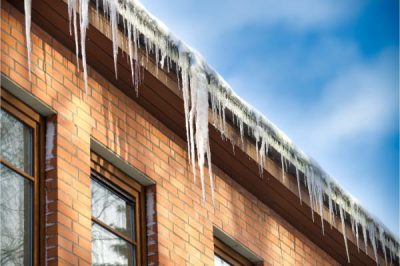
A properly installed drip edge seals the perimeter of the roof deck, covering the gap between the decking and the fascia. This prevents backing-up water from easily seeping into the eaves and soffits. While it doesn’t stop ice dams from forming (that requires insulation and ventilation), it acts as a critical shield that minimizes the damage they can cause.
A Barrier Against Unwanted Guests
Your attic is a warm, dry haven that local wildlife would love to call home. Squirrels, raccoons, bats, and insects are opportunistic invaders. They often look for small gaps at the roofline to chew through or squeeze into. The gap between the roof deck and the fascia is a common entry point.
Because the drip edge is made of metal—usually aluminum, galvanized steel, or copper—it acts as an impenetrable physical barrier. It closes off that gap, making it significantly harder for pests to gnaw their way into your attic. In this way, a drip edge is not just a water-management tool; it is a key part of your home’s pest-control strategy.
Material Matters: Choosing the Right Drip Edge
Not all drip edges are created equal. They come in various materials to suit your home’s durability and aesthetic needs. Aluminum is a popular choice because it is lightweight, rust-resistant, and easy to work with. Galvanized steel offers superior strength and is ideal for areas with heavy wind or potential impact damage. For those seeking a premium look, copper drip edges develop a beautiful patina over time and offer unmatched longevity.
Regardless of the material, the installation must be precise. Industry best practices require that the drip edge be securely nailed to the deck, with adjacent pieces overlapping by at least two inches to prevent leakage between sections. At the eaves, the drip edge goes under the roofing felt; at the rakes (the sloped sides), it goes over the felt. This “shingle-style” layering ensures that water always flows over a lap, never under it.
Discover why drip edges are essential for water management, protecting your roof and home from leaks, rot, and structural damage.
The Small Investment with Big Returns
In the grand scheme of a roof replacement, the cost of installing a high-quality drip edge is negligible—often just a tiny fraction of the total budget. Yet, the protection it offers is immense. It extends the life of your shingles, protects your woodwork from rot, keeps your attic dry, and maintains the structural integrity of your roofline. If your current roof lacks this essential component, or if you are planning a new roof installation, insisting on a proper drip edge is one of the smartest decisions you can make for your home’s future.
