
Paragon Exterior, your Philadelphia roofing contractor for dependable roofing repairs, replacements, and complete exterior care.
Your roof is the silent guardian of your home, enduring scorching sun, driving rain, heavy snow, and gusty winds to keep your family safe and dry. Yet, despite its critical role, it often goes unnoticed until a leak appears on the living room ceiling. Regular roof inspections are essential for catching small issues before they snowball into costly disasters, but the thought of climbing a tall, wobbly ladder can be daunting—and dangerous—for the average homeowner.
The good news is that you don’t need to risk life and limb to assess your roofing system’s health. With the right approach and a keen eye, you can conduct a thorough preliminary inspection without your feet ever leaving the grass. By making ground-level inspections a part of your seasonal maintenance routine, you can identify red flags early, save money on repairs, and extend the lifespan of your investment.

The Art of the Ground-Level Inspection: What You Need to Know
Inspecting your roof from the ground is about perspective and patience. It requires you to methodically circle your home, looking at the roof from various angles to catch details that might be hidden from a single vantage point. Before you begin, equip yourself with a good pair of binoculars. They are the professional inspector’s secret weapon, allowing you to zoom in on specific shingles, flashing, and gutters to spot subtle defects that the naked eye would miss. Pick a bright, overcast day if possible; harsh sunlight can create deep shadows that hide damage, while the soft light of an overcast sky provides better visibility of surface textures.

1. Scan for Shingle Distress Signals
Start your inspection by focusing on the shingles themselves, as they are your roof’s primary shield. Through your binoculars, scan the surface for anything that breaks the uniform pattern. Look for shingles that are cracked, broken, or completely missing. These are obvious vulnerabilities that allow water to infiltrate the underlayment and decking below.
Pay close attention to the condition of the shingles. Are they curling at the edges or buckling in the middle? This “cupping” or “clawing” is a classic sign of aging and heat stress, indicating that the shingles have lost their flexibility and are becoming brittle. Also, look for dark, patchy areas. On asphalt roofs, this often indicates granule loss. The mineral granules on shingles protect the asphalt from UV rays; when they shed, the shingle deteriorates rapidly. If your roof looks like it has “bald spots,” it is nearing the end of its functional life.
2. Examine the Gutters and Downspouts
Your drainage system offers significant clues about what is happening up on the roof. While you are on the ground, look at the gutters. Are they sagging, pulling away from the fascia, or hanging unevenly? This could indicate that they are clogged with heavy debris or that the fascia board behind them is rotting.
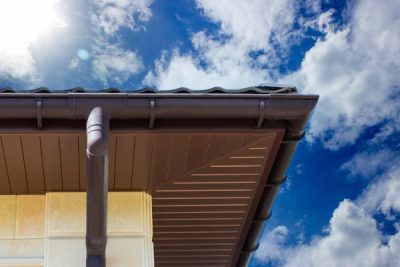
Check the ground around your downspouts. If you see a pile of colored grit that looks like sand, it is the protective granules from your shingles. Finding a significant amount of granules in the gutters or at the base of downspouts is a strong indicator that your roof is shedding its protective coating and may need professional attention soon. Additionally, look for rust spots or seam separation in the gutters, which can cause leaks that damage your siding and foundation.
3. Check the Flashing and Penetrations
The most common leak points on any roof are the areas where the roof plane is penetrated by other structures, such as chimneys, vent pipes, skylights, and dormers. These areas are sealed with metal strips called flashing. From your vantage point on the ground, use your binoculars to inspect these critical junctions.
Look for flashing that appears rusted, bent, or pulled away from the chimney or roof. If the seal is broken, water can easily seep into the interior walls. For vent pipes, check the rubber “boots” around the base. These rubber seals can crack and rot over time due to sun exposure. If you spot a cracked boot or a piece of flashing flapping in the breeze, you have likely found a future leak waiting to happen.
4. Inspect the Soffit and Fascia
The roof isn’t just the top surface; it includes the eaves and overhangs that protect your walls. Walk around the perimeter of your house and look up at the soffit (the underside of the roof overhang) and the fascia (the vertical board facing out). These areas are susceptible to water damage and rot, especially if the gutters are clogged or the roof edge is not properly sealed.
Look for peeling paint, water stains, or soft, rotting wood. Small holes or nests in the soffit can also indicate that pests like squirrels, birds, or bees have found a way into your attic. Keeping these areas secure is vital for maintaining proper attic ventilation and preventing uninvited guests from moving in.
5. Don’t Forget the “Inside-Out” Check
While the focus is on the exterior, a safe ground-level inspection should also include a quick tour of your home’s interior ceilings and the attic (if accessible). Water often travels a long way before it drips, so a stain in the living room might originate from a roof defect ten feet away. Look for yellow or brown water rings on your ceilings and walls. In the attic, turn off the lights and look for any pinpricks of daylight shining through the roof deck. Seeing daylight means there is a direct path for water to enter. If you spot these internal warning signs, they confirm that the external issues you spotted—or missed—are already affecting your home’s integrity.
Learn how to inspect your roof safely from the ground with simple tips to spot damage, leaks, and issues without climbing a ladder.
When to Call a Professional
A ground-level inspection is an excellent screening tool, but it has its limitations. If you spot missing shingles, significant granule loss, or damaged flashing, it is time to call a professional roofing contractor. They have the safety gear and expertise to climb, perform a hands-on assessment, and perform repairs safely. Never try to walk on a steep or damaged roof yourself; no DIY repair is worth a fall. By monitoring your roof from the ground, you become an informed homeowner, ready to take action exactly when it’s needed.
