
Work with a reliable Philadelphia roofing contractor for repairs, replacements, and inspections that protect your home year-round.
Your roof is the silent sentry of your home. Day after day, year after year, it endures the blistering heat of the summer sun, the relentless pounding of spring rains, and the crushing weight of winter snow. It does this job without complaint, often going unnoticed until the moment water starts dripping onto your dining room table. By the time a leak manifests inside your living space, the damage has often been compounding for months or even years. The insulation is soaked, the wood is rotting, and the repair bill has skyrocketed.

However, roofs rarely fail overnight. Long before the first drop of water breaches your ceiling, your roof begins to broadcast distress signals. These signs are subtle at first—a missing granule here, a curled edge there—but they tell a clear story of a system reaching the end of its life. Learning to recognize these early warnings is the difference between a planned, budgeted replacement and a frantic, expensive emergency. By taking a proactive approach and observing your home’s exterior with a critical eye, you can catch failure in its infancy and protect your biggest investment.

Decoding the Visual Language of Your Home’s Defense
You don’t need to be a professional roofer to spot the red flags. You simply need to know where to look and what the textures and shapes are telling you. Most asphalt shingle roofs have a lifespan of 20 to 25 years, but environmental factors can accelerate this timeline. To perform a basic checkup, grab a pair of binoculars and scan your roof from the safety of the ground, or take a careful walk around the perimeter. Here are the specific indicators that your roof is waving a white flag.
The Tale of the Granules in the Gutter
Asphalt shingles are covered in a layer of ceramic-coated mineral granules. These aren’t just for color; they act as the roof’s sunscreen, protecting the asphalt layer beneath from the sun’s destroying UV rays. As a roof ages, the adhesive holding these granules begins to dry out and release them.
After a heavy rain, take a look inside your gutters or at the splash blocks at the bottom of your downspouts. If you see a heavy accumulation of what looks like black sand or colored grit, your roof is shedding its armor. On the shingles themselves, this manifests as “bald spots”—dark, smooth patches where the granules have worn away. Once the asphalt is exposed to the sun, it will dry out, crack, and fail rapidly. This is often one of the first and most reliable signs that a roof is nearing retirement.
Shingles That Are Curling, Cupping, or Clawing
A healthy shingle lies flat against the roof deck, creating a seamless, watertight seal. As the asphalt ages and loses its volatile oils, the shingle loses its flexibility and begins to shrink and distort. This usually happens in two ways: “cupping,” where the center of the shingle sinks and the edges turn up, or “clawing,” where the middle rises and the corners curl under.
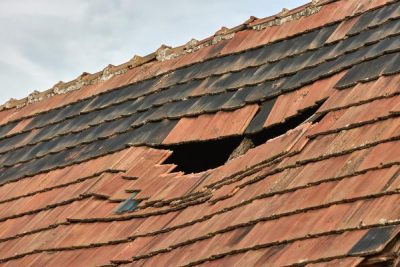
When you look up at your roof, does it look smooth and uniform, or does it look textured and “crispy,” like a piece of bacon that has been in the pan too long? Curling shingles are brittle and can easily snap off in a strong wind. More importantly, they no longer seal properly, allowing wind-driven rain to blow underneath them and rot the wood decking below.
Compromised Flashings and Cracked Boots
While we focus on the shingles, the most vulnerable parts of a roof are actually the penetrations—the chimneys, skylights, plumbing vents, and valleys. These areas are sealed with metal flashing and rubber boots to bridge the gap between the roof and the object poking through it.
Inspect the metal flashing around your chimney. Is it rusted? Is the tar or caulk sealing it dried out and cracking? Look at the rubber “boots” around the vent pipes. Over time, the sun degrades the rubber, causing it to crack or rot away entirely. If these seals are broken, water has a direct highway into your attic walls. Often, a roof leak is not a shingle failure but a flashing failure, which can sometimes be repaired without replacing the entire roof.
The Presence of Moss and Algae
A little bit of green fuzz might look charming on a cottage, but on a modern home, moss is a parasite. Unlike the black streaks caused by algae (which are mostly cosmetic), thick green moss holds moisture against the roof surface like a wet sponge. In the winter, this trapped water freezes and expands, causing micro-cracks in the shingles.
Furthermore, moss has roots that work their way under the edges of the shingles, physically lifting them up and breaking the adhesive seal. If your roof is covered in thick moss, it is likely that the granules beneath have been destroyed and the structural integrity of the shingle has been compromised. This is a clear sign that the roof is fighting a losing battle against moisture.
Sunlight and Stains in the Attic
Finally, the most telling sign of roof failure often isn’t found on the roof at all, but underneath it. On a bright, sunny day, go up into your attic and turn off the lights. Look up at the underside of the roof decking. If you see pinpricks of daylight shining through the boards, you have active holes in your roof. If light can get in, water is definitely getting in.
While you are there, look for dark streaks or water stains on the wood, especially around the chimney and vents. Check the insulation for signs of matting or dampness. A musty, mildewy smell in the attic is a strong indicator that moist air is trapped and causing slow, invisible rot. Catching these signs from the inside can give you a head start before the water ever ruins your drywall downstairs.
