
Work with a reliable Philadelphia roofing contractor for repairs, replacements, and inspections that protect your home year-round.
There is a certain romantic aesthetic associated with a moss-covered roof. It evokes images of a cozy, centuries-old cottage nestled deep in a fairytale forest, blending seamlessly with the natural world. However, for the modern homeowner, this “natural” look is far from a dream—it is a slow-motion disaster for your home’s primary defense system. While a green, velvety layer might look charming in a painting, in reality, it is a biological infestation that is actively working to decompose your roofing materials.

Many homeowners mistake moss and algae for simple dirt or cosmetic blemishes. They assume that the green patches or black streaks are just surface-level issues that can be ignored until the next spring cleaning. The truth is much more concerning. These organisms are living entities that feed on moisture and mineral fillers, and their presence accelerates the aging process of asphalt shingles, wood shakes, and even tiles. Understanding the specific ways moss and algae attack your roof is the first step in protecting your investment and preventing a premature replacement.

The Silent Biological War on Your Shingles
To effectively combat these intruders, it is important to understand that moss and algae are two very different enemies. Algae is typically responsible for the dark, vertical discoloration often seen on the north side of roofs, while moss is the thick, clumping plant life that grows in shaded, damp areas. While they often appear together, they damage your home in distinct ways. Ignoring them allows them to establish a foothold, turning your roof into a micro-ecosystem that traps water and degrades structural integrity.
The Sponge Effect: How Moss Rots Your Roof
Moss is, by nature, a sponge. It thrives in damp environments and has an incredible capacity to absorb and retain water. When moss establishes itself on your roof, it acts as a moisture trap. Instead of allowing rainwater to shed quickly off the shingles and into the gutters, the moss holds the water against the surface of the roof long after the rain has stopped.
This constant exposure to moisture is devastating for asphalt shingles. It keeps the granules and the asphalt mat underneath permanently damp, which eventually leads to the breakdown of the materials. In colder climates, this “sponge effect” becomes even more dangerous during freeze-thaw cycles. As the water trapped in the moss freezes, it expands. This expansion causes micro-cracks in the shingles and can widen existing fissures, significantly shortening the lifespan of the roof.
Physical Agitation: Lifting and Breaking the Seal
Beyond the moisture damage, moss causes physical trauma to the roof structure. Unlike algae, moss has a root-like system called rhizoids. These tiny tendrils anchor the plant by digging into the tiny crevices between granules and, more alarmingly, under the edges of the shingles themselves.
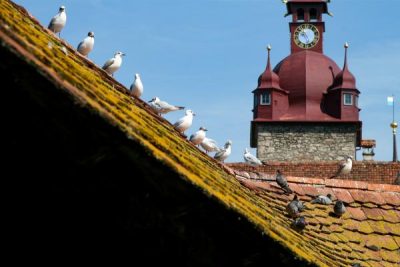
As the moss grows and thickens, it pushes the leading edge of the shingles upward. This lifting action breaks the adhesive tar seal that bonds the shingles together. Once this seal is broken, your roof loses its wind resistance. The lifted shingles are now vulnerable to catching the wind during a storm and being ripped off entirely. Furthermore, this lifting creates a clear path for wind-driven rain to blow underneath the shingles and rot the wooden roof deck below, leading to leaks that may not be detected until the ceiling drywall begins to crumble.
The Truth About Those Ugly Black Streaks
While moss provides the physical damage, algae (specifically a cyanobacteria called Gloeocapsa magma) provides the chemical warfare. This is the culprit behind the unsightly black streaks that plague roofs across humid regions. These microscopic organisms are airborne and spread from rooftop to rooftop. Once they land, they begin to feed on the crushed limestone filler used in modern asphalt shingles.
While algae does not lift shingles like moss does, it literally eats away at the material composition of the roof. Over time, this erosion loosens the protective ceramic granules that coat the shingle. These granules are essential for blocking UV rays and providing fire resistance. As the algae feeds, the granules detach and wash away in the rain, leaving the asphalt layer exposed to the sun’s drying, cracking heat.
The Hidden Cost of Energy Inefficiency
There is also a thermal penalty to paying for a dirty roof. Asphalt shingles are designed to reflect a certain amount of sunlight to keep the attic temperature manageable. However, the black stains caused by severe algae growth absorb solar heat rather than reflecting it. This dark pigmentation turns your roof into a heat sink.
This increased heat absorption raises the temperature in your attic, which in turn forces your air conditioning system to work harder to cool the living space below. Over a long, hot summer, a roof covered in black algae streaks can result in noticeably higher energy bills, adding a monthly financial cost to the aesthetic annoyance.
Safe Removal and Long-Term Prevention
If you spot these invaders, your instinct might be to blast them away with a high-pressure power washer. Do not do this. High pressure will strip the granules off your shingles faster than any storm, effectively ruining the roof instantly. Instead, moss and algae should be treated with specialized, gentle chemical solutions that kill the spores without damaging the asphalt.
Discover how moss and algae can damage your roof, reduce its lifespan, and learn effective ways to prevent and treat growth.
For long-term prevention, consider installing zinc or copper strips along the ridge of your roof. As rain hits these metal strips, it releases ions that wash down the roof slope. These ions create an environment where moss and algae cannot survive, keeping your roof clean, efficient, and structurally sound for years to come.
