
Best Metal Roofing Contractor in Philadelphia PA
TL;DR Summary
For Philadelphia rowhomes, a metal roof is a significant long-term investment that offers superior durability, weather resistance, and energy efficiency compared to traditional materials. While the upfront cost is higher (typically $9,000 – $42,000+), a metal roof can last 40-70 years, often 2-3 times longer than asphalt shingles [49, 50]. Key benefits for rowhomes include excellent performance on low-slope roofs, effective snow and ice shedding, and potential energy savings of up to 40% [34, 51]. Choosing a professional metal roofing contractor in Philadelphia, PA like Paragon Exterior is crucial to navigate local building codes, historic district requirements, and ensure proper installation that prevents leaks and noise issues.
Table of Contents
- Introduction: Reimagining the Crown of Your Philly Rowhome
- The Unique Roofing Challenges of Philadelphia Rowhomes
- The Great Debate: Metal vs. Shingle for Philly Rowhomes
- Metal Roof Cost in Philadelphia: A 2025 Breakdown
- Choosing the Right Metal Roof: Standing Seam vs. Corrugated
- The Installation Process: What to Expect from a Professional Contractor
- Navigating Philadelphia Building Codes & Historic Districts
- Metal Roofs and Homeowner’s Insurance in Pennsylvania
- Why Choose Paragon Exterior for Your Rowhome’s Metal Roof
- Frequently Asked Questions About Metal Roofing in Philadelphia
- Conclusion: Is a Metal Roof the Right Investment for Your Rowhome?
Reimagining the Metal Roof For Your Philly Rowhome
Philadelphia is a city of rowhomes. From the historic trinities in Society Hill to the porch-front homes in West Philly, these iconic structures define our city’s landscape [43]. As a rowhome owner, you understand the unique blend of pride and responsibility that comes with maintaining a piece of Philadelphia’s history. But when it comes to protecting your home, the roof—often a flat or low-slope design—presents a distinct set of challenges [43]. You need a solution that can handle Philly’s humid summers, icy winters, and everything in between [13].
Increasingly, homeowners are looking beyond traditional asphalt shingles and considering a modern, durable alternative: metal roofing. But this raises questions. Is it suitable for a historic or attached home? Is the investment worth it? Many homeowners, as seen in online forums, express concern about finding a trustworthy contractor who understands the nuances of rowhome metal roofing and won’t disappear after taking a deposit [20]. It’s a valid fear when you’re protecting your most significant asset.
This comprehensive guide is designed to address those concerns head-on. As a leading metal roofing contractor in Philadelphia, PA, we at Paragon Exterior believe in empowering homeowners with transparent, detailed information. We’ll break down the pros and cons, dive deep into the metal roof cost in Philadelphia, explore different styles like standing seam roofing Philly residents love, and explain the critical importance of a professional metal roof installation in Philadelphia. By the end, you’ll have the clarity you need to decide if a metal roof is the right long-term investment for your sanctuary.
The Unique Roofing Challenges of Philadelphia Rowhomes
Before deciding on a material, it’s crucial to understand the specific demands your rowhome places on its roof. Unlike standalone suburban houses, Philadelphia rowhomes have a unique architectural DNA that requires specialized roofing knowledge [43]. Ignoring these factors is a common mistake that can lead to costly repairs down the line.
One of the most common concerns we hear from Philadelphia homeowners is how to handle the specific structure of their roof. Here are the primary challenges:
- Low-Slope and Flat Roofs: Most rowhomes feature “flat” roofs, which actually have a slight slope (a minimum of 1/4″ per foot) to direct water towards drains [43]. These low-slope designs are highly susceptible to ponding water, which can infiltrate seams and cause leaks if the roofing material isn’t perfectly sealed. Materials like asphalt shingles are often not suitable for slopes below 2:12 or 3:12, making specialized systems necessary [14, 66].
- Party Walls and Flashing: Your rowhome shares walls with its neighbors. This means the points where your roof meets the adjacent property’s wall (the party wall) are critical areas for potential water intrusion. Proper flashing—the metal pieces that seal these joints—is non-negotiable and requires expert installation to prevent leaks that could damage both your home and your neighbor’s [11].
- Historic District Regulations: Many of Philadelphia’s most charming neighborhoods, like Society Hill, Queen Village, and Rittenhouse Square, are historically designated [43]. If your home is on the Philadelphia Register of Historic Places, any exterior alteration, including a roof replacement, requires pre-authorization from the Philadelphia Historical Commission [44]. A contractor must be familiar with these regulations and know which materials, like modern metal roofs designed to mimic slate, are permissible [49, 52].
- Philadelphia’s Four-Season Climate: Our region’s weather is tough on roofs. We experience hot, humid summers that can bake and crack materials, followed by cold winters with heavy snow and ice damming [13, 50]. A rowhome roof must be able to reflect solar heat for energy efficient roofing in Philadelphia during the summer and shed heavy snow loads without buckling in the winter [49].
- Access and Logistics: The tight quarters of city living present logistical challenges. There’s often limited space for dumpsters and equipment. This is a pain point many homeowners worry about—the mess and disruption of a roofing project. A professional contractor utilizes modern solutions, like the Equipter, a self-propelled, raisable container that minimizes ground debris and protects your property and your neighbors’.
Understanding these challenges is the first step. The next is choosing a material and a contractor who can master them. A metal roof, when installed correctly, can be an exceptional solution for every one of these rowhome-specific issues.
The Great Debate: Metal vs. Shingle for Philly Rowhomes
The most common roofing material in the U.S. is the asphalt shingle, primarily due to its low upfront cost [9]. However, for a long-term investment in a Philadelphia rowhome, the comparison isn’t so simple. The durability and performance of metal roofing present a compelling case, especially given our city’s unique architectural and climate challenges. Let’s weigh the pros and cons of metal vs shingle in Philly.
Pro Tip: Think Lifetime Value, Not Just Upfront Cost
While shingles are cheaper to install, a metal roof’s lifespan of 40-70+ years means you may avoid two or three expensive roof replacements over the life of your home. The long-term savings on replacement, maintenance, and energy bills often make metal the more economical choice over decades [51].
Here is a direct comparison to help you evaluate the best choice for your property:
| Feature | Metal Roofing | Asphalt Shingles |
|---|---|---|
| Lifespan | 40-70+ years. A one-time investment for most homeowners [49, 50]. | 15-30 years. Expect to replace it 2-3 times in the same span as one metal roof [9]. |
| Upfront Cost | Higher. Typically 2-3 times the cost of shingles [54]. Average project cost in PA is $6,000 – $42,000 [9]. | Lower. The most budget-friendly option for initial installation [9]. |
| Durability & Weather Resistance | Excellent. Withstands high winds (up to 140 mph), sheds snow and ice easily, and is fire and impact-resistant [50, 54]. Ideal for Philly’s storms. | Good, but vulnerable. Can be damaged by hail, high winds can lift shingles, and granules wear off over time. Prone to ice dams [9, 47]. |
| Energy Efficiency | Excellent. Reflects solar heat, reducing summer cooling costs by up to 40% [34, 51]. A key benefit for energy efficient roofing in Philadelphia. | Poor to Fair. Absorbs and retains heat, increasing the load on your AC system in summer [34]. |
| Maintenance | Minimal. Requires occasional cleaning and inspections. No granules to wear off or shingles to curl [9]. | Regular. Requires checking for missing/damaged shingles, curled edges, and granule loss, especially after storms [9]. |
| Weight | Lightweight. Puts less stress on a rowhome’s structure, which can be beneficial for older buildings [49]. | Heavier. Multiple layers can add significant weight to the roof structure [11]. |
| Suitability for Low Slopes | Excellent, especially standing seam systems which are designed to be watertight on low pitches common to rowhomes [66]. | Poor. Not recommended for slopes below 2:12. Requires special application techniques that can fail [14]. |
| Resale Value | High. Homeowners can recoup around 85% of the cost in added home value. A major selling point for buyers [6, 51]. | Lower. A new shingle roof is expected, but doesn’t add as much long-term value as metal. |
For a Philadelphia rowhome, the advantages of metal—particularly its performance on low-slope roofs, superior weather resistance, and metal roof durability—often outweigh the higher initial cost. It’s a system built to solve the specific problems rowhome owners face.
Metal Roof Cost in Philadelphia: A 2025 Breakdown
One of the biggest hurdles for homeowners considering a metal roof is the price tag. It’s crucial to be transparent about this: a metal roof is a premium product with a higher upfront cost. However, understanding what goes into that price helps you see the long-term value. The average metal roof cost in Philadelphia can range from $9,408 to over $42,000, depending on a multitude of factors [4, 9].
Let’s break down the costs you can expect for a professional metal roof installation in Philadelphia.
Factors Influencing Your Final Cost:
- Roof Size and Complexity: A simple, flat rowhome roof will cost less than one with multiple dormers, skylights, or complex angles.
- Material Choice: The type of metal you choose is the single biggest cost variable. Copper is a premium, lifetime material, while steel offers a more budget-conscious balance of durability and price [6].
- Labor and Contractor Quality: Installation accounts for a significant portion of the cost, with labor in PA ranging from $2 to $6 per square foot [11]. Hiring a certified, insured, and experienced metal roofing contractor in Philadelphia, PA costs more than a handyman, but it protects you from faulty installation—a common complaint from homeowners who chose a cheap bid [20].
- Tear-Off of Old Roofing: Philadelphia code requires removing old layers if there are two or more, or if the existing roof is damaged [46]. This can add $1 to $5 per square foot to the project cost [11].
- Underlying Deck Repair: If the wooden deck beneath your old roof is rotted or damaged, it must be replaced before the new roof can be installed, adding to the cost.
- Permits: A building permit is required for re-roofing in Philadelphia, and your contractor will handle this process [44].
Material Cost Comparison Chart
The material itself is a major component of the total price. Here’s a look at the estimated costs per square foot for common metal roofing materials suitable for the Philadelphia market.
| Material Type | Material Cost (per sq. ft.) | Installed Cost (per sq. ft.) | Key Characteristics |
|---|---|---|---|
| Galvalume Steel | $4 – $9 | $8 – $18 | Excellent corrosion resistance, strong, most popular choice [11, 6]. |
| Aluminum | $7 – $14 | $9 – $21 | Lightweight, highly resistant to rust and saltwater corrosion [6, 11]. |
| Stainless Steel | $7.50 – $20 | $14 – $40 | Extremely durable, superior rust resistance, higher-end option [11]. |
| Copper | $15 – $30+ | $25 – $60+ | Lifetime material, develops a classic patina, premium aesthetic and cost [6]. |
Disclaimer: These prices are estimates for budgeting purposes only and are based on 2024-2025 market data [6, 11]. Your actual cost will vary. For a precise quote, schedule a free, no-pressure estimate with Paragon Exterior.
Choosing the Right Metal Roof: Standing Seam vs. Corrugated
When you picture a metal roof, you might think of the wavy panels on a barn. That’s corrugated metal. But for residential applications, especially the sleek, modern look many Philadelphia homeowners desire, standing seam roofing is the premier choice. Understanding the difference is key to selecting the right system for your rowhome.
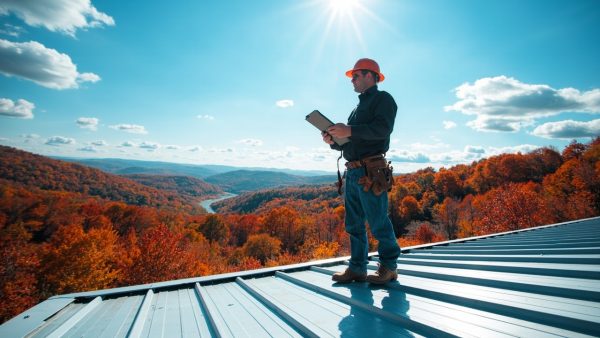 Standing seam metal roofing offers a sleek, modern aesthetic with superior weather protection due to its concealed fastener system.
What is Standing Seam Metal Roofing?
A standing seam roof consists of vertical metal panels with raised, interlocking seams. The key feature is its concealed fastener system: the panels are secured to the roof deck with clips, and the screws are hidden and protected by the seam itself [68]. This design eliminates thousands of potential leak points, making it exceptionally watertight—a critical feature for the low-slope roofs common on Philly rowhomes [68, 66].
What is Corrugated Metal Roofing?
Corrugated metal roofing features panels with a classic wavy or ribbed pattern. Its primary distinction is the exposed fastener system. The panels are overlapped and screwed directly through the face of the metal into the roof deck [69]. While more affordable, these exposed screws are vulnerable to weathering, potential loosening from thermal expansion, and improper installation, which can create leak points over time [69].
| Feature | Standing Seam | Corrugated |
|---|---|---|
| Fastener System | Concealed. Fasteners are protected from the elements, drastically reducing leak risk [68]. | Exposed. Screws penetrate the panel face, creating potential failure points [69]. |
| Weather Tightness | Superior. Ideal for low-slope rowhome roofs and heavy rain/snow [68]. | Good, but requires a steeper slope (typically 3:12 minimum) to be effective [66]. |
| Aesthetics | Sleek, modern, architectural. Clean lines complement both historic and contemporary homes [69]. | Utilitarian, rustic, or industrial. More common on agricultural or outbuildings [69]. |
| Durability & Lifespan | 40-70+ years. Less maintenance required due to protected fasteners [69]. | 25-45 years. Exposed fasteners may need periodic checking and resealing [69]. |
| Cost | Higher. A premium system due to complex installation and concealed fasteners [69]. | Lower. More budget-friendly materials and simpler installation [69]. |
| Solar Panel Compatibility | Excellent. Solar panels can be clamped onto the seams without penetrating the roof [69]. | Challenging. Mounting solar panels requires drilling more holes in the roof [69]. |
For most Philadelphia rowhome owners, especially those with low-slope roofs or a desire for a modern aesthetic, standing seam roofing is the superior investment. Its unmatched water resistance and minimal maintenance provide the peace of mind that city homeowners need.
The Installation Process: What to Expect from a Professional Contractor
A metal roof’s performance is only as good as its installation. This is a point repeatedly emphasized by homeowners who have had bad experiences: choosing the cheapest bid often leads to improper installation, leaks, and costly future repairs [20, 65]. A professional metal roofing contractor in Philadelphia, PA, follows a meticulous, transparent process. At Paragon Exterior, we believe you should know exactly what to expect from day one.
Here is our step-by-step process for a flawless rowhome metal roofing installation:
- Comprehensive Inspection & Free Estimate: Our process begins with a thorough inspection of your current roof, decking, and structure. We don’t just give you a number; we provide a detailed, transparent estimate within 24-48 hours, explaining our findings and your options without any sales pressure.
- Permitting and Code Compliance: We handle all the paperwork. We secure the necessary building permits from the Philadelphia Department of Licenses and Inspections and ensure the entire project plan adheres to the latest Philadelphia Residential Code [44, 46].
- Site Preparation & Debris Management: We treat your home like our own. We protect your property, landscaping, and your neighbors’ space. We use the Equipter RB4000, a specialized lift that catches old roofing materials and debris, ensuring your property remains clean and safe throughout the project.
- Old Roof Removal: Our in-house, certified crew carefully removes the old roofing materials down to the deck, as required by code for most re-roofing projects in Philadelphia [46].
- Deck Inspection and Repair: With the old roof gone, we conduct a final inspection of the wooden roof deck. Any rotted or damaged sheathing is replaced to create a solid, stable foundation for your new metal roof—a critical step skipped by corner-cutting contractors [65].
- Underlayment and Ice Barrier Installation: We install a high-quality synthetic underlayment over the entire roof deck. Crucially for our climate, we install a specialized ice and water shield along the eaves and other vulnerable areas to protect against ice dams, a major cause of winter leaks in PA [47]. This is a requirement under the PA building code [47].
- Metal Panel Installation: Our factory-certified installers meticulously place each metal panel. For standing seam systems, we ensure panels are correctly interlocked and secured with concealed clips that allow for natural thermal expansion and contraction—preventing fastener loosening and future leaks [9, 65].
- Flashing and Detail Work: This is where expertise truly shows. We custom-fabricate and install flashing around chimneys, vents, skylights, and party walls to create a completely watertight seal [11].
- Final Clean-Up and Inspection: We conduct a final, thorough clean-up of the job site, including a magnetic sweep for stray nails. A project manager will then walk you through the finished project, ensuring your complete satisfaction.
Navigating Philadelphia Building Codes & Historic Districts
Hiring a roofing contractor who is unfamiliar with Philadelphia’s specific regulations is a significant risk. It can lead to failed inspections, costly rework, or even legal issues. As a homeowner, you are ultimately responsible for ensuring your project is compliant, which is why choosing a knowledgeable local contractor is paramount [47].
Here’s what you need to know about the regulatory landscape for roofing in Philadelphia:
Key Philadelphia & Pennsylvania Roofing Regulations
- Governing Codes: Construction in Philadelphia is governed by the Philadelphia Code, which adopts versions of the International Code Council (ICC) codes. Currently, this includes the 2018 International Residential Code (IRC) [45]. However, Pennsylvania is set to adopt the 2021 IRC statewide, with enforcement beginning January 1, 2026, bringing stricter rules for things like ice barriers and underlayment [47, 71].
- Permit Requirements: A building permit from the Department of Licenses and Inspections (L&I) is required for re-roofing projects [44]. An EZ Permit can often be used for standard re-roofing, but your contractor must be licensed and insured in Philadelphia to obtain it [46].
- Tear-Off Requirements: You cannot simply install a new roof over old ones indefinitely. The Philadelphia code requires a complete tear-off down to the sheathing if there are already two or more layers of roofing, or if the existing roof is water-damaged or made of materials like wood shake or slate [46].
- Minimum Slope: Metal roof systems have minimum slope requirements. For example, lapped, non-soldered seam roofs (like some corrugated styles) require a minimum slope of 3:12 (25%) [67]. Standing seam systems can often be used on much lower slopes, down to 1/4:12, making them ideal for many rowhomes [66].
- Drip Edge & Flashing: The code specifies requirements for drip edges at eaves and gables to direct water away from the fascia, a crucial detail for preventing rot [46].
Historic Properties: A Special Consideration
If your rowhome is listed on the Philadelphia Register of Historic Places, you must get approval from the Philadelphia Historical Commission before any work begins. They have specific guidelines on appropriate materials. The good news is that modern metal roofing comes in styles and colors that can mimic historic materials like slate, often making it an approved option [44, 52]. A contractor experienced in historic renovations, like Paragon Exterior, can help guide you through this approval process.
Navigating this web of regulations is part of our job as your metal roofing contractor in Philadelphia, PA. We ensure every aspect of your project, from the underlayment to the final fastener, is fully compliant with both current and upcoming codes, protecting your investment for the long haul.
Metal Roofs and Homeowner’s Insurance in Pennsylvania
A new roof is a major financial decision, but it can also have a positive impact on your other homeownership costs, specifically your insurance premiums. Many homeowners don’t realize that upgrading to a high-quality metal roof can potentially lead to significant savings.
Insurance companies base their rates on risk. A roof that is more resistant to common perils like fire, wind, and hail is less likely to result in a claim, making your home less risky to insure. Here’s how a metal roof can affect your policy in Pennsylvania:
Potential for Premium Discounts
Many insurance providers offer discounts for homes with superior roofing materials. Here’s why metal roofs often qualify:
- Fire Resistance: Metal is non-combustible. This provides a huge safety advantage and lowers the risk of a total loss from fire, a factor insurers value highly [9].
- Impact Resistance (Hail): Many metal roofing systems carry a Class 4 impact resistance rating (UL 2218), the highest available. This means they are built to withstand significant hail damage, a major source of claims [72].
- Wind Resistance: Metal roofs, particularly standing seam systems, have exceptional wind uplift resistance, often rated for winds of 140 mph or more. This is a significant benefit in a state like Pennsylvania, which experiences severe storms and high winds [54].
Some insurers offer discounts ranging from 5% to 35% for installing a qualifying impact-resistant roof [9, 72]. It is crucial to talk to your insurance agent before installation to see what discounts they offer and what documentation (like a UL 2218 certificate) you’ll need to provide.
Understanding Wind/Hail Deductibles in PA
Pennsylvania is one of the states where insurance companies are permitted to include mandatory wind/hail deductibles in their policies [72]. Unlike a standard deductible (e.g., $1,000), a wind/hail deductible is usually a percentage of your home’s insured value, typically 1% to 5% [72].
Consider this scenario:
- Your home is insured for $400,000.
- You have a 2% wind/hail deductible.
- A hailstorm causes $20,000 in damage to your old asphalt roof.
In this case, you would be responsible for paying the first $8,000 (2% of $400,000) of the repair cost out-of-pocket. By installing a Class 4 rated metal roof that resists the damage in the first place, you could avoid this massive expense entirely. This long-term financial protection is one of the most overlooked benefits of investing in metal roof durability.
Why Choose Paragon Exterior for Your Rowhome’s Metal Roof
Choosing the right material is only half the battle. The success of your rowhome metal roofing project hinges on the expertise, integrity, and professionalism of the contractor you hire. In a market with nearly 800 roofing companies servicing the Philadelphia area, making the right choice can feel overwhelming [29]. At Paragon Exterior, we’ve built our reputation by focusing on what matters most to homeowners: trust, quality, and a stress-free experience.
We understand the concerns homeowners have—fears of messy job sites, poor communication, and contractors who don’t stand by their work [20]. We’ve structured our entire process to eliminate these worries.
The Paragon Exterior Difference:
- Local Expertise & In-House Crews: We’re not storm chasers. We are a local, Feasterville-Trevose based company with over 20 years of combined experience working on Philadelphia-area homes. Our crews are our employees—not subcontractors. They are factory-certified professionals who understand the nuances of our region’s architecture and weather.
- GAF-Certified with Unbeatable Warranties: As a GAF-certified contractor, we offer warranties that most competitors can’t match. This includes the GAF System Plus and Golden Pledge warranties, which can provide up to 50 years of coverage on materials and up to 25 years on our workmanship. This is your ultimate protection and peace of mind.
- Respect for Your Property: We treat your home as if it were our own. This philosophy is backed by our use of the Equipter RB4000, which ensures debris never touches your lawn or landscaping. Our customers consistently praise our exceptional job site cleanliness and the respect our crews show for their property.
- Transparent & Reliable Communication: From your first call, you’ll notice a difference. We schedule free estimates within 24-48 hours. We provide clear, detailed quotes and maintain open communication throughout the project. You’ll never be left wondering about the status of your job.
- Financial Flexibility: We believe a safe, durable roof should be accessible. We offer flexible financing options to help you manage the investment in your home’s future. We also have a price match guarantee, ensuring you get the best value.
- A Commitment to Long-Term Relationships: Our service doesn’t end when the job is done. We offer free annual roofing inspections to ensure your investment remains in peak condition. We aim to be your trusted exterior partner for life, not just for one project.
When you choose Paragon Exterior, you’re choosing a metal roofing contractor in Philadelphia, PA, that is licensed, insured, highly-rated (with 63+ five-star reviews), and dedicated to delivering superior craftsmanship and an unparalleled customer experience.
Frequently Asked Questions About Metal Roofing in Philadelphia
How much more does a metal roof cost than shingles in Philly?
A metal roof typically costs two to three times more than an asphalt shingle roof upfront [54]. While a shingle roof might cost $7,000-$15,000, a comparable metal roof could range from $12,000 to $40,000+. However, the metal roof’s 40-70 year lifespan versus the 15-30 year life of shingles often makes it more cost-effective over the long term [9, 50]. Contact us for a precise, side-by-side comparison for your home.
Are metal roofs too noisy for a rowhome during rain?
This is a common myth based on old-fashioned installations on barns. Modern residential metal roofs are installed over a solid roof deck and high-quality underlayment, often with added insulation. This combination provides sound-dampening that makes a metal roof just as quiet as, if not quieter than, an asphalt shingle roof during a rainstorm [9, 49].
Do I need a permit to install a metal roof on my Philadelphia rowhome?
Yes. The City of Philadelphia requires a building permit for any re-roofing project [44]. A licensed and insured contractor like Paragon Exterior will handle the entire permitting process with the Department of Licenses and Inspections to ensure your project is fully compliant with local codes [46].
Can a metal roof be installed on a historic rowhouse?
Absolutely. Modern metal roofing is available in a wide variety of styles and colors, including profiles that convincingly mimic traditional slate or wood shakes [49, 52]. This makes it a suitable and often-approved choice for historic homes. If your home is in a designated historic district, we can help you navigate the approval process with the Philadelphia Historical Commission.
Will a metal roof make my rowhome hotter in the summer?
No, quite the opposite. This is a major benefit of energy efficient roofing in Philadelphia. Metal roofs are highly reflective and are often coated with special pigments that re-emit solar energy. This can keep your attic and home significantly cooler, reducing your air conditioning costs by up to 40% compared to a heat-absorbing dark shingle roof [34, 51].
How does a metal roof handle Philadelphia’s snow and ice?
Extremely well. The smooth surface of a metal roof allows snow and ice to slide off much more easily than on a granular shingle roof [49]. This reduces the heavy load on your roof structure and significantly lowers the risk of ice dams forming at the eaves, which are a primary cause of winter leaks [47].
What is the expected ROI on a metal roof in Philadelphia?
Nationally, homeowners can expect to recoup a high percentage of their investment in increased home value—often around 85% [6]. In a competitive real estate market like Philadelphia, a durable, low-maintenance, and energy-efficient metal roof is a powerful selling feature that can make your home more attractive to buyers and justify a higher asking price.
What happens if a metal roof gets dented by hail?
While high-quality steel is very durable, it can be dented by extremely large hail [9]. Thicker gauge metals are more resistant. It’s important to note that most homeowner’s insurance policies consider minor cosmetic denting that doesn’t affect the roof’s function as non-covered damage [34]. However, for significant damage, our team at Paragon Exterior can provide expert storm damage repair services.
How long does a metal roof installation take on a rowhome?
The timeline depends on the size and complexity of your roof, as well as the weather. For a typical Philadelphia rowhome, a professional installation by an experienced crew usually takes between 2 to 5 days from tear-off to final clean-up. We provide a clear, reliable schedule before we begin.
Why is professional installation so critical for a standing seam metal roof?
A standing seam roofing Philly installation is a technical craft. It requires specialized tools and knowledge to ensure the panels interlock correctly, the concealed clips are properly placed to allow for thermal movement, and the flashing is perfectly sealed [65, 68]. Improper installation is the #1 cause of metal roof failure and leaks, which is why choosing a certified, experienced contractor is non-negotiable.
Conclusion: Is a Metal Roof the Right Investment for Your Rowhome?
For the discerning Philadelphia rowhome owner, the decision to invest in a metal roof is a trade-off between a higher upfront cost and a lifetime of benefits. While traditional shingles offer a lower initial price, a professionally installed metal roof provides unparalleled metal roof durability, superior protection against our city’s harsh weather, and significant long-term savings through energy efficiency and minimal maintenance.
We understand the concerns that come with such a large investment—worries about finding a reliable contractor, navigating city regulations, and ensuring the job is done right [20]. The key takeaway is that the value of a metal roof is fully realized only through expert installation. For the unique challenges of a rowhome metal roofing project—from low slopes to historic considerations—choosing an experienced and reputable metal roofing contractor in Philadelphia, PA is the most important decision you will make.
With Philadelphia’s unpredictable weather, a roof that can effortlessly shed snow, withstand high winds, and keep your home cool in the summer isn’t a luxury; it’s a smart, proactive investment in your property’s future. If you value longevity, performance, and peace of mind, a metal roof is more than worth it—it’s the last roof you may ever need to buy.
Ready to Explore Metal Roofing for Your Philadelphia Home?
Paragon Exterior is Philadelphia’s trusted choice for professional metal roof installation. Our experienced team provides:
- Free, no-pressure estimates within 24-48 hours
- GAF-certified installations with industry-leading warranties
- Licensed, insured, and highly-rated professionals
- Transparent pricing and clear communication
Call us today at (215) 799-7663 or visit our website for your free estimate. Let us show you the Paragon difference.
