
Architectural, 3-Tab, Luxury Shingles
TL;DR Most homeowners should go with architectural shingles. 3-Tab is being phased out and has the lowest quality. Luxury shingles are better. But the increase in benefits does not match the rise in cost. If you want the most bang for your buck, architectural shingles are the way to go.
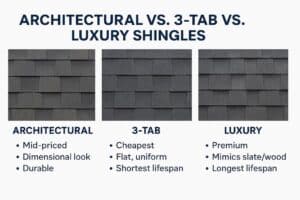
- 3-Tab shingles → Cheapest, flat, short lifespan, being phased out.
- Architectural shingles → Mid-priced, dimensional, durable, most popular today.
- Luxury shingles → Premium, most extended lifespan, mimic slate/wood, best curb appeal.
What Are 3-Tab Shingles?
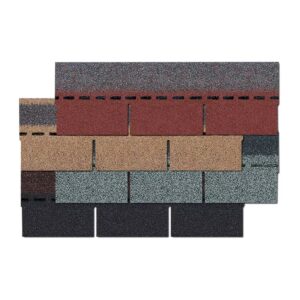
3-tab shingles are the original design of asphalt shingles. They’re flat, single-layer shingles with three cutouts per shingle strip — which is where the name comes from.
They remain the most affordable roofing option, but they’re steadily losing market share. Most roofers today recommend moving up to architectural shingles for better protection. Many manufacturers are scaling back production, and some insurance companies no longer favor them due to their limited durability. They also don’t perform as well in storms and don’t last as long. Modern homeowners expect more than 15–20 years from a roof.
3-Tab Shingles Pros:
- Lowest upfront cost
- Lightweight, easier to install
- Simple, uniform appearance
3-Tab Shingles Cons:
- Short lifespan (15–20 years)
- Thin, prone to wind damage
- Limited curb appeal compared to modern options
- Fading availability
What Are Architectural Shingles?
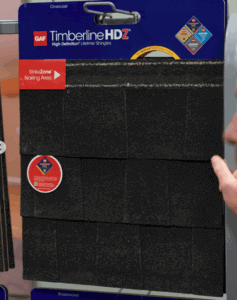
Architectural shingles, also called laminate or dimensional shingles, are now the most popular choice in Pennsylvania, New Jersey, and Delaware. They’re made from multiple layers of asphalt and fiberglass, giving them a thicker, textured look that mimics wood shakes. More importantly, they’re much more durable than 3-tab shingles. They are what give a roof that layered look.
They do cost more than 3-tab shingles (usually 25–40% more), but they typically last 25–30+ years, resist storm damage better, and add resale value with their dimensional appearance. Something to note is that they are a bit heavier, meaning your roof decking must be in good condition.
Architectural Shingles Pros:
- Lifespan 25–30+ years
- Better storm resistance
- Dimensional look improves curb appeal
- Wide variety of colors/styles
Architectural Shingles Cons:
- More expensive than 3-tab
- Heavier material load
- Still not as “high-end” as luxury shingles
What Are Luxury Shingles?
Luxury shingles sit at the top of the asphalt shingle lineup.
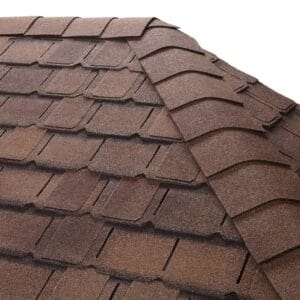
They’re designed to mimic slate, tile, or cedar shakes at a fraction of the cost of natural materials. Luxury shingles are incredibly thick and heavy, which makes them both more durable and more visually striking. They are more expensive, but they last longer than architectural shingles. They really stand out with their added curb appeal and unique designs.
Luxury Shingles Pros:
- Lifespan up to 40–50 years
- Maximum curb appeal (looks like slate/wood)
- Excellent durability against storms
- Highest resale value impact
Luxury Shingles Cons:
- Expensive — often 2x or more than architectural
- Heavy — requires a solid roof structure
- Not always necessary for every home
3-Tab Shingles vs. Architectural Shingles vs. Luxury Shingles
By now, you know the basics of each shingle type and their main pros and cons. But how do they actually stack up when you compare them side by side? Let’s look at the factors that really matter when making a decision: curb appeal, storm durability, lifespan, warranty, and cost.
Curb Appeal
Every new roof boosts your home’s appearance, but the type of shingle you choose determines how much of a difference it makes.
- 3-Tab shingles lay flat and look plain. With fewer color options (since they’re being phased out), they don’t add much visual appeal.
- Architectural shingles come in a wide range of colors and textures. Many even mimic cedar shakes, giving your home a layered, dimensional look.
- Luxury shingles are in a league of their own. They’re designed to look like natural slate or wood shakes, which many consider the highest curb appeal in roofing. The tradeoff? Fewer color options compared to architectural.
Winner: Luxury shingles, followed by architectural, with 3-tab trailing far behind. But ultimately, go with what you like looking at every day — it’s your home.
Storm Damage Durability
Here in the Northeast, wind, hail, and heavy snow are facts of life. Durability is critical.
- 3-Tab shingles are the most vulnerable. They’re thinner and more likely to lift or tear off in high winds. Many carry only a 60 mph wind rating.
- Architectural shingles are much stronger thanks to their layered design and heavier weight. Many are rated for 110 mph winds (and can be upgraded to 130 mph with the right accessories).
- Luxury shingles take durability even further. Their thickness helps them resist hail damage better, and like architectural shingles, they can handle high wind ratings.
Winner: Luxury shingles win again, but not by much. Architectural offers solid storm resistance at a mid-level price point.
Lifespan
Think of shingle lifespan as the return on your investment.
- 3-Tab shingles: 15–20 years under good conditions, often less in storm-heavy areas.
- Architectural shingles: 25–30 years on average. With proper installation and attic ventilation, they can sometimes stretch past 30.
- Luxury shingles: 30–40 years, and some lines are marketed as lasting 50 years. In real-world PA/NJ/DE conditions, 35–40 years is realistic.
Winner: Luxury shingles last the longest, but architectural shingles offer a better ROI than 3-tab. Again, we are seeing the same theme that architectural shingles give you the most bang for your buck.
Material Warranty
Warranties back up the manufacturer’s confidence in their product.
- 3-Tab shingles usually come with a 25-year limited warranty.
- Architectural and luxury shingles typically start with a 30-year warranty, prorated after 10 years.
- If you install a complete roofing system (shingles, underlayment, and accessories) from the same brand, you can often qualify for an enhanced 50-year, non-prorated warranty.
Winner: Architectural and luxury shingles tie here. Both can be covered by enhanced long-term warranties that 3-tab shingles can’t match.
Cost (3-Tab vs Architectural vs Luxury Shingles Price)
Cost is often the deciding factor, and it varies widely.
- 3-Tab shingles: ~$2.50–$3.50 per sq. ft. installed (cheapest upfront).
- Architectural shingles: ~$3.50–$5.50 per sq. ft. installed. About 25–40% more than 3-tab, but they last 10+ years longer.
- Luxury shingles: $6–$10+ per sq. ft. installed—the most expensive, but with unmatched appearance and longevity.
3-tab vs. architectural shingles cost difference: Expect to spend about 15–40% more upfront on architectural shingles. It’s worth it because 3-tab shingles may need to be replaced a decade sooner.
Winner: Architectural shingles are the best value overall. Luxury shingles are an investment, while 3-tab shingles seem cheaper but often cost more in the long run due to repairs and early replacement.
Comparison Between 3-Tab, Architectural, and Luxury Shingles
| Feature | 3-Tab Shingles | Architectural Shingles | Luxury Shingles |
|---|---|---|---|
| Curb Appeal | Flat, plain look | Dimensional, textured | Premium mimics slate or cedar |
| Storm Damage Durability | Prone to wind lift & damage | Good wind & impact resistance | Best resistance, thickest materials |
| Lifespan | 15–20 years | 25–30+ years | 30–40 years |
| Warranty & Support | Limited, often shorter | Lifetime limited warranties | Premium, often transferable |
| Cost (per sq. ft. installed) | $2.50–$3.50 | $3.50–$5.50 | $6–$10+ |
Frequently Asked Questions
What is the difference between architectural and luxury shingles?
The difference really comes down to design and performance. Architectural shingles are a strong middle ground — thicker than basic 3-tabs, with a layered look that gives your roof more depth. They hold up well in storms and usually last 25–30 years. Luxury shingles, on the other hand, are the top-of-the-line option. They’re built to mimic natural slate or cedar shakes, weigh more, and can often last 35–40 years (sometimes longer with proper care). The trade-off is price — luxury shingles can cost nearly twice as much as architectural shingles.
Are architectural shingles really better than 3-tab?
Yes, without question. They’re stronger, last longer, and give your home a noticeable boost in curb appeal. If you’re planning to stay in your home more than a few years, the extra investment pays off in durability and resale value.
Do roofers still use 3-tab shingles?
Some roofers still install them for budget-conscious projects, but it’s becoming rare. Manufacturers are phasing them out, and most professionals recommend upgrading to architectural since 3-tabs just don’t meet today’s weather expectations.
What are the disadvantages of architectural shingles?
The main drawbacks are cost and weight. They’re heavier than 3-tab shingles, so your roof structure needs to be sound before installation. And while they’re not overly expensive, they do cost more than 3-tab shingles — usually 25–40% more upfront.
Why are 3-tab shingles being phased out?
They don’t last as long, they’re more likely to blow off in strong winds, and their flat, uniform look has fallen out of style. Most homeowners today want a roof that performs better and adds value to their home, which is why architectural shingles have become the new standard.
What is the best type of shingles to use?
For most homes, architectural shingles are the best choice. They balance affordability with durability, they come in plenty of colors, and they look sharp without breaking the bank. If you want a roof that stands out and lasts decades, luxury shingles are worth it — but for the average homeowner, architectural is the sweet spot.
What Are the Best Shingle Brands?
Now that you’ve decided on the type of shingle, the next step is choosing a brand. Please read our blog discussing the top shingles brands here.
At Paragon Exterior, we’ve installed roofs across Pennsylvania, New Jersey, and Delaware. We’ll walk you through costs, show you real samples, and make sure your roof matches your budget and style.
